Featured

Knowing Your Financial Rights Against Debt Harassment
Table of Contents
There is no federal government financial obligation relief program for credit cards. Debt relief business provide services to help you handle and pay off credit card financial obligation for less than you owe. When you settle credit card financial obligation, you and the credit card business agree on a quantity you'll pay, which is less than the overall balance you owe.
If you don't have a swelling sum to offer your financial institutions (many people don't), you might select to stop making credit card payments and instead set aside cash in a dedicated account. If you stop paying your creditors for any factor, anticipate credit score damage and collection efforts. When you have actually enough conserved to use your financial institutions, settlements can start.

Bankruptcy filings are public records and can make it hard to get tasks in particular fields. You also quit control when you submit bankruptcythe court tells you just how much you will pay (Chapter 13) or what possessions you need to provide up (Chapter 7) to please your lenders. Bankruptcy has a significant negative effect on your credit report.
On the pro side, financial obligation settlement could assist you leave debt quicker than making minimum payments, since you're paying less than the overall balance. A downside of picking financial obligation settlement for debt relief is that it's likely to harm your credit standing. Note, however, that if you're already falling back on your payments, the odds are good you've already seen an unfavorable influence on your credit score.
If you're considering charge card financial obligation relief programs, research study your alternatives carefully. Check the services used, the charges, and online reviews to see what other individuals are stating. No matter which financial obligation relief program you select, the most crucial thing is doing something about it to get your finances and credit back on track.
Everything to Know Before Applying for Bankruptcy
There may also be some drawbacks. It's crucial to comprehend both the benefits and drawbacks. Debtors with government student loans may qualify for income-driven payment strategies. These plans can make a big difference. They base your monthly payments on a percentage of your earnings. This assists make sure you can pay for those payments.
Working long enough in particular civil service professions could certify you to have the rest of your financial obligation forgiven. So could paying into an income-driven payment program for 20 or 25 years. If you have actually become completely and completely disabled, you might not have to repay your student loans. Examine for more details and to learn if you certify.
Student loan impairment discharge needs evidence of your condition. These programs are for individuals in real need, so not everyone will qualify. In many cases, forgiven financial obligation is gross income. Nevertheless, debt forgiven under federal trainee loan programs is typically an exception. There are a couple of states where forgiven federal trainee loan financial obligation may be dealt with as gross income.
Restoring Your Financial Future After Bankruptcy
Let's attend to some common myths about government debt relief programs to clean up any confusion. Truth: In most cases, internal revenue service and student loan financial obligation forgiveness programs are based upon your ability to pay. So, while they reduce the quantity you owe, they might not completely remove your financial obligation. Reality: Different programs have different eligibility requirements.
People from a range of monetary backgrounds might benefit. It's just a matter of meeting particular requirements. Reality: The application process might take a while. But there are many resources and support group offered to assist you. With the right assistance, you can resolve the application process. Now that we've exposed these misconceptions, you can better understand what government financial obligation relief programs can provide.
Federal government financial obligation relief programs don't cover all types of debt, however there are other options that can help. Here's what you can do if you have financial obligation problems the government can't solve.
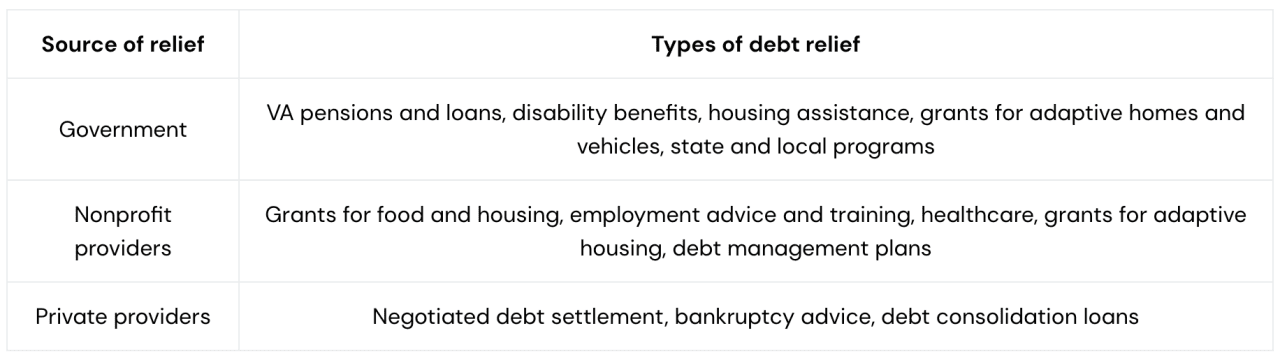
These companies include private debt relief companies and not-for-profit credit therapists. Here are some of the options they may provide: Hardship programs: Lots of financial institutions provide difficulty programs to help you survive bumpy rides. These programs may reduce or stop briefly payments, lower interest rates, or waive costs for individuals experiencing financial difficulty.
Evaluating Expert Debt Settlement Services in 2026
This could result in substantial debt reduction. Credit counseling: A licensed credit therapist can assist you produce a budget and discover finance abilities if you enlist in their debt management program. If you have financial obligation issues, begin taking steps to fix them: Reach out to financial institutions to ask about hardship programsSpeak to a debt relief expert or credit therapist for a complimentary consultationConsider which service best fits your situationAct quickly so you do not build up more debt or face collection actionsGovernment debt relief programs might belong to the service for you.
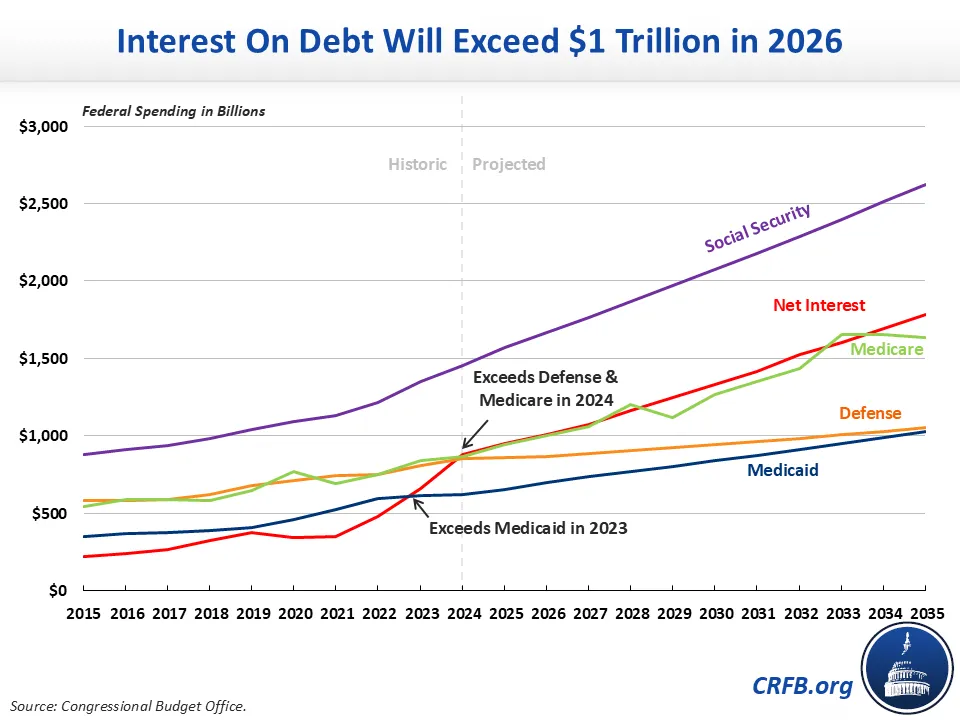
Home debt in America is over 18 trillion dollars, according to the Federal Reserve Bank of St Louis. With so much financial obligation, it's not surprising that many Americans want to be debt-free.
Financial obligation is always a financial concern. However it has actually become more difficult for lots of people to handle recently, thanks to increasing rate of interest. Rates have increased in the post-COVID age in reaction to unpleasant economic conditions, including a surge in inflation brought on by supply chain interruptions and COVID-19 stimulus spending.
While that benchmark rate does not straight control rates of interest on debt, it affects them by raising or decreasing the expense at which banks borrow from each other. Included expenses are usually handed down to clients in the form of higher rates of interest on debt. According to the Federal Reserve Board, for example, the average rates of interest on charge card is 21.16% as of May 2025.
Comparing Expert Debt Settlement Services in 2026
Card rates of interest may also increase or stay high into 2026 even if the Federal Reserve changes the benchmark rate, because of growing creditor concerns about rising defaults. When creditors are scared consumers will not pay, they often raise rates. Experian also reports typical rate of interest on automobile loans hit 11.7% for secondhand automobiles and 6.73% for new automobiles in March 2025.
Individual loan rates are likewise greater. With lots of sort of financial obligation becoming more pricey, lots of individuals want to deal with their debt for goodespecially provided the continuous economic unpredictability around tariffs, and with an economic crisis hazard looming that might affect employment potential customers. If you hesitate of rates increasing or the economy failing, placing yourself to end up being debt-free ASAP is one of the smartest things you can do.

Latest Posts
Creating a Strategic Recovery Plan for 2026

Preventing Foreclosure Through Housing Counseling
:fill(white):max_bytes(150000):strip_icc()/Accredited_Debt_Relief-7442e17bfa25443687db80134fd57c0f.png)
Navigating the 2026 Insolvency Process